
You want a basement that adds livable space and value without wasting time or money. This article shows practical finishing ideas for an Indianapolis home, so you can compare family rooms, guest suites, home theaters, workspaces, and small apartments and pick what fits your budget and lot constraints. It focuses on what to compare, what to ask contractors, and the tradeoffs that matter so you make smart choices.
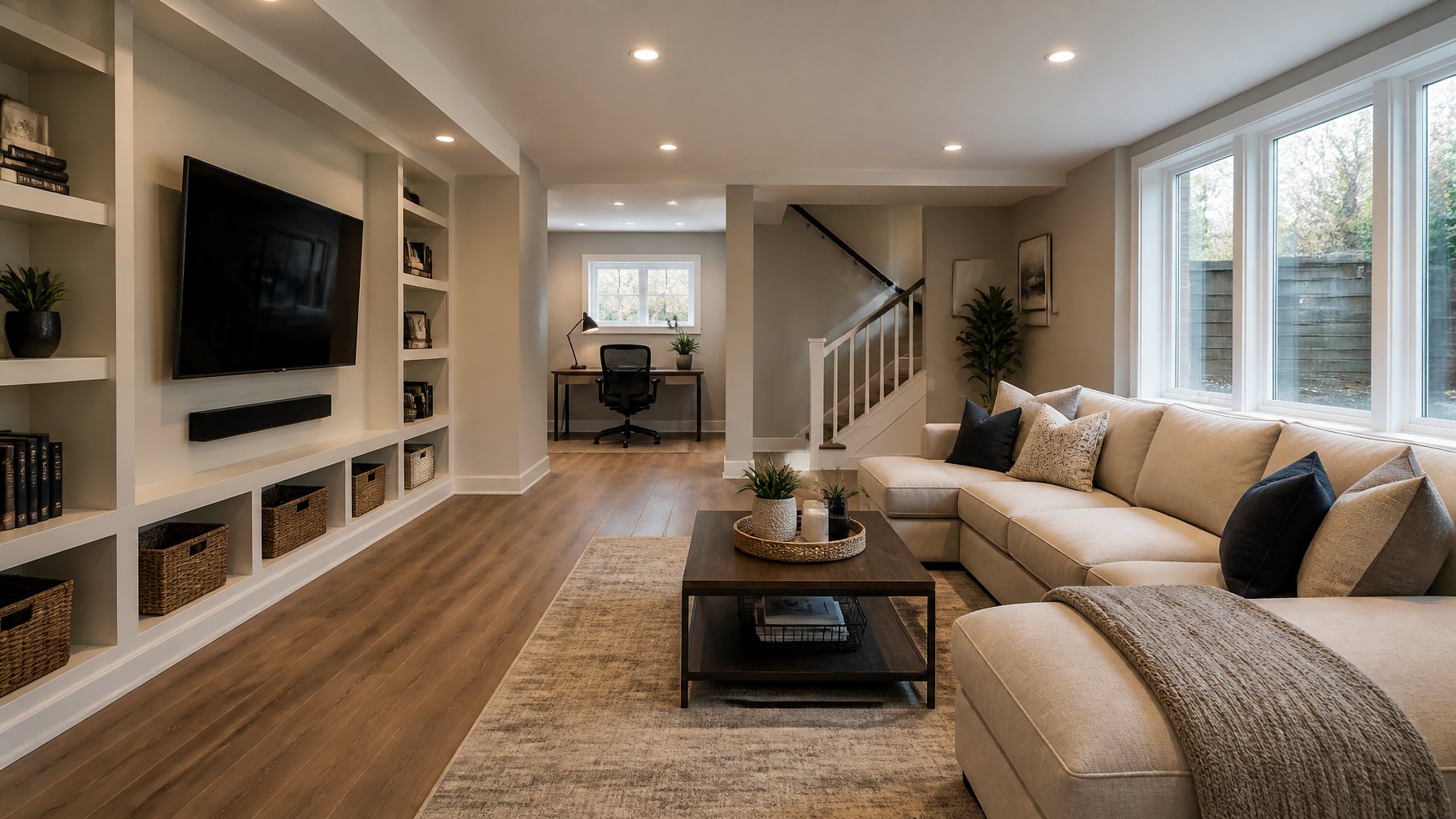
The options cover comfort, code concerns, and everyday use—think egress, insulation, lighting, flooring, and where plumbing or HVAC matters most. It helps homeowners weigh costs versus long-term benefit and choose layouts that work for Midwestern weather and resale in Indianapolis.
1) Basement family room with built-in media wall
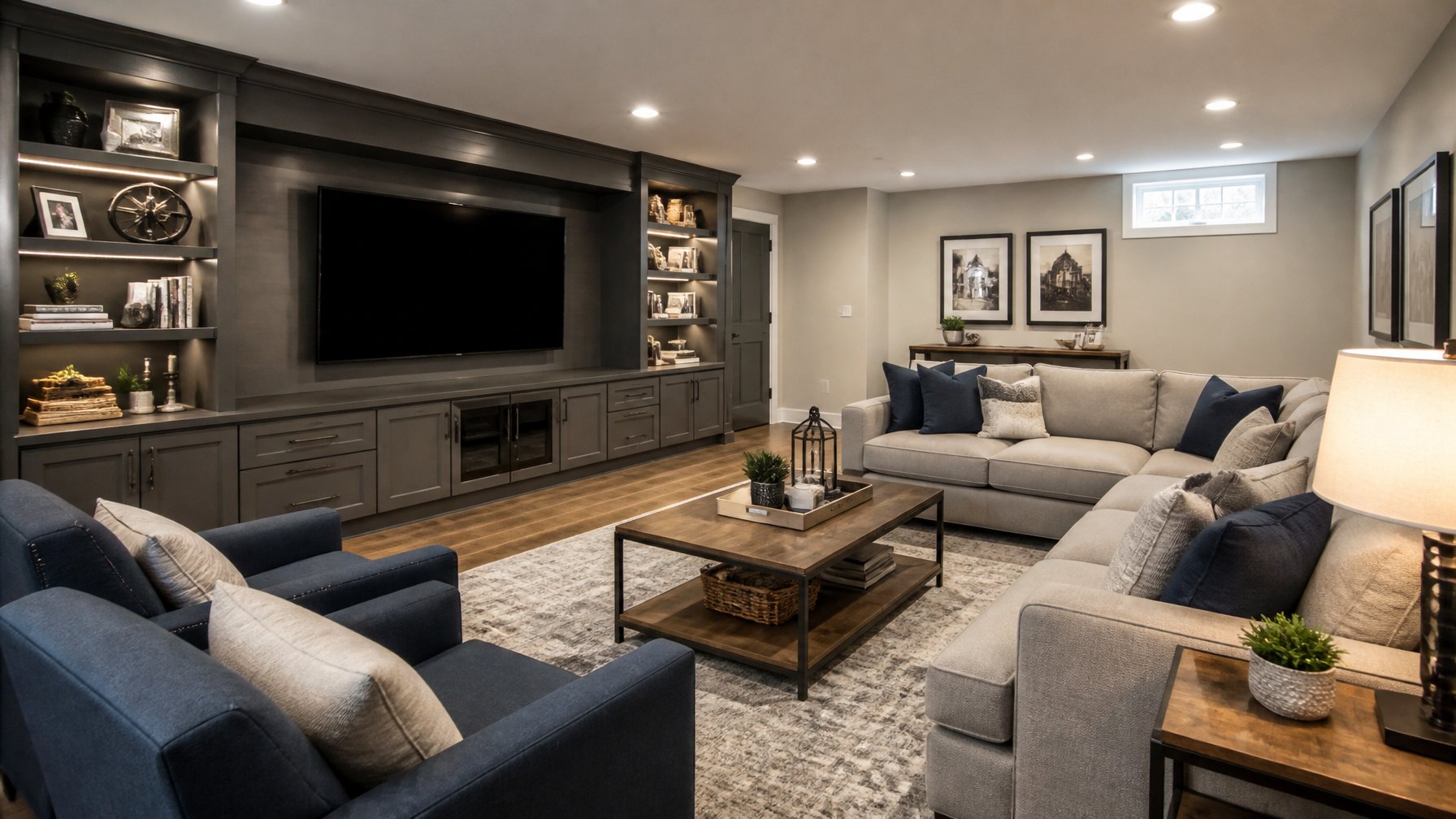
A built-in media wall gives homeowners a tidy focal point and hides cables and speakers. They should compare materials (plywood vs. MDF), finish options, and how much recessed shelving they want for components and decor.
Ask about ventilation for equipment and wiring access for future upgrades. Tradeoffs include higher upfront carpentry cost versus cleaner long-term maintenance and storage.
They should plan speaker placement, TV mounting height, and power outlet locations before framing. Consider lighting—recessed lights plus dimmable sconces work well—and plan for acoustic panels if sound matters.
For local contractors and design ideas, visit the basement finishing service page. Images should show realistic home-improvement scenes: framed wall, installed TV, shelving, and hidden cable runs.
2) Guest suite with egress window and walk-in closet
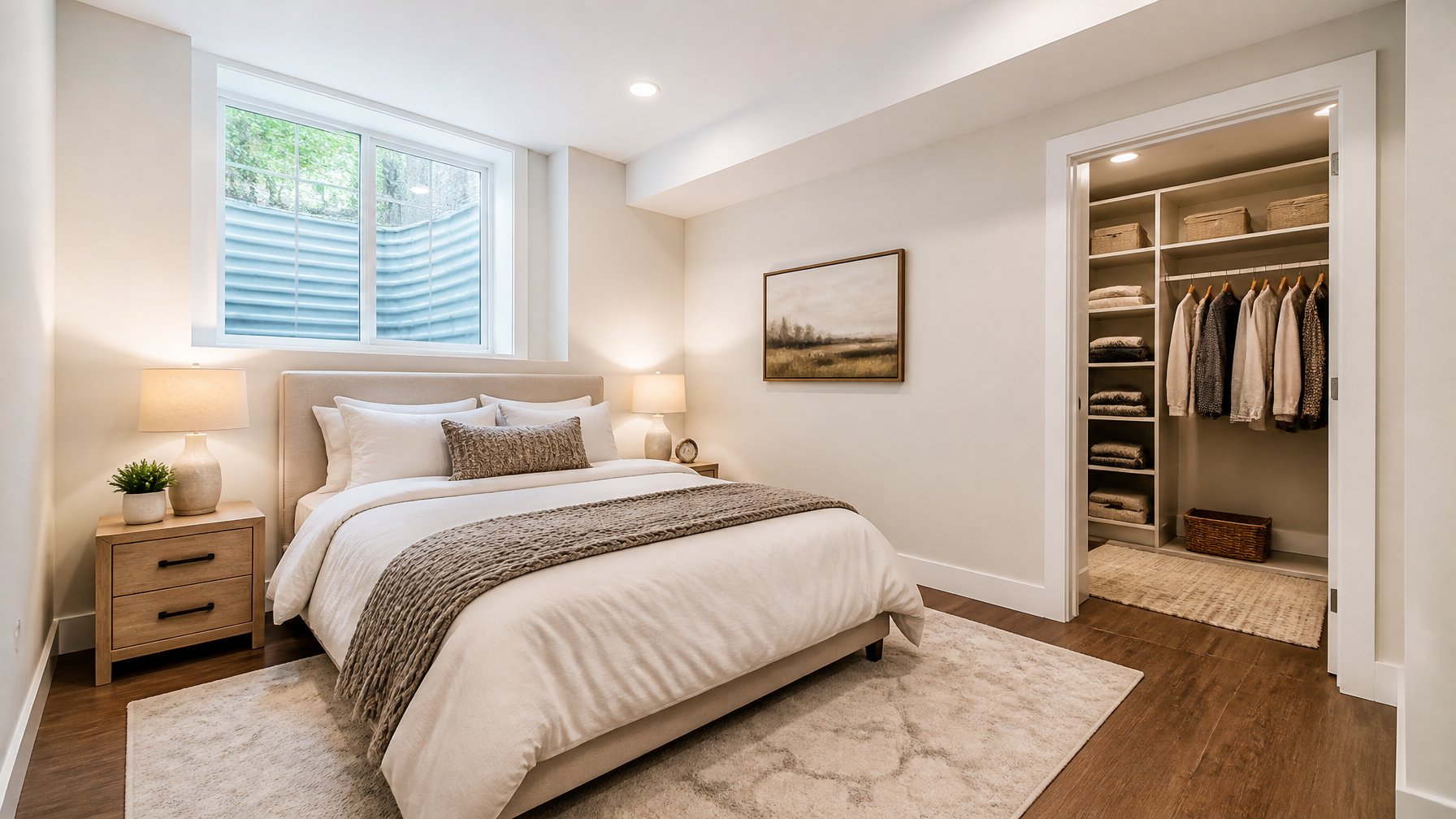
A guest suite adds comfort and value. Homeowners should compare egress window types for size, material, and cost, and ask about local code requirements and excavation needs. Tradeoffs include natural light versus wall space for furniture.
Plan the walk-in closet by measuring desired storage and choosing shelving versus built-in drawers. Ask contractors about ventilation, lighting, and insulation to prevent dampness. Compare closet door styles for space use.
Verify that the egress window meets safety rules and that the escape path is clear outside. Ask about window wells, covers, and finished steps if needed. Balance cost of larger windows against added resale appeal.
Consider soundproofing between the suite and main rooms. Ask which drywall, framing, and insulation options reduce noise best. For design ideas and contractor resources, see the homepage.
3) Home theater with acoustic panels and tiered seating
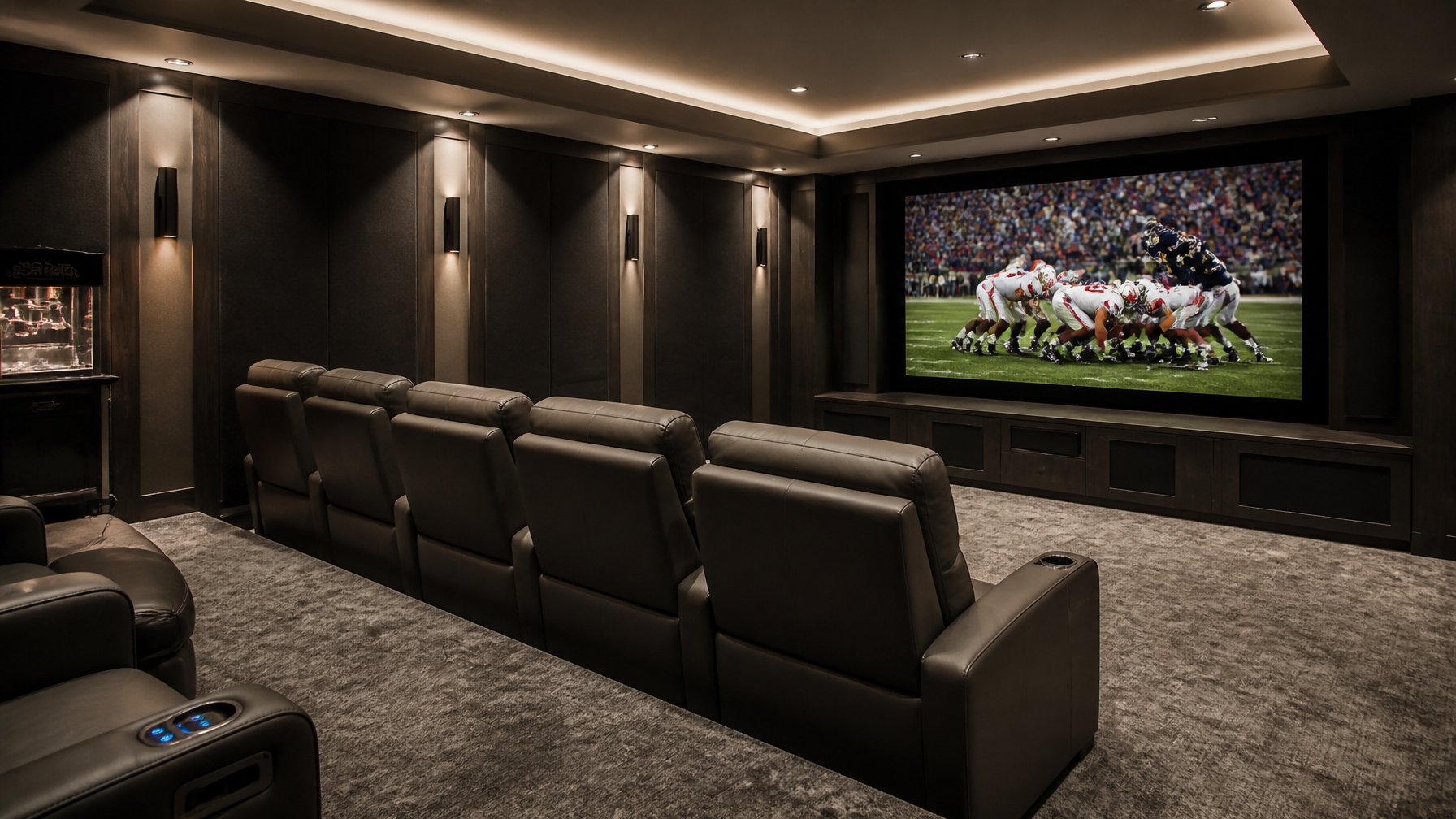
A home theater turns a basement into a media room. Homeowners should compare speaker layouts (5.1 vs 7.1 vs Dolby Atmos) and ask about ceiling height limits for tall speakers and screens. They should weigh cost versus sound quality when choosing speakers and an AV receiver.
Acoustic panels reduce echo and improve clarity. Ask installers what NRC rating the panels have and where to place panels for best results. Choose fire-rated, moisture-resistant panels for basements.
Tiered seating improves sightlines in deeper rooms. Measure rise and depth to keep step heights comfortable and meet local code. Consider fixed risers for cushions or removable platforms for flexible space use.
Plan lighting and ventilation along with the theater build. Homeowners should compare dimmable lighting options and quiet HVAC vents to avoid noise interference. See basement finishing services for planning and contractor coordination.
4) Wet bar with quartz countertop and wine fridge
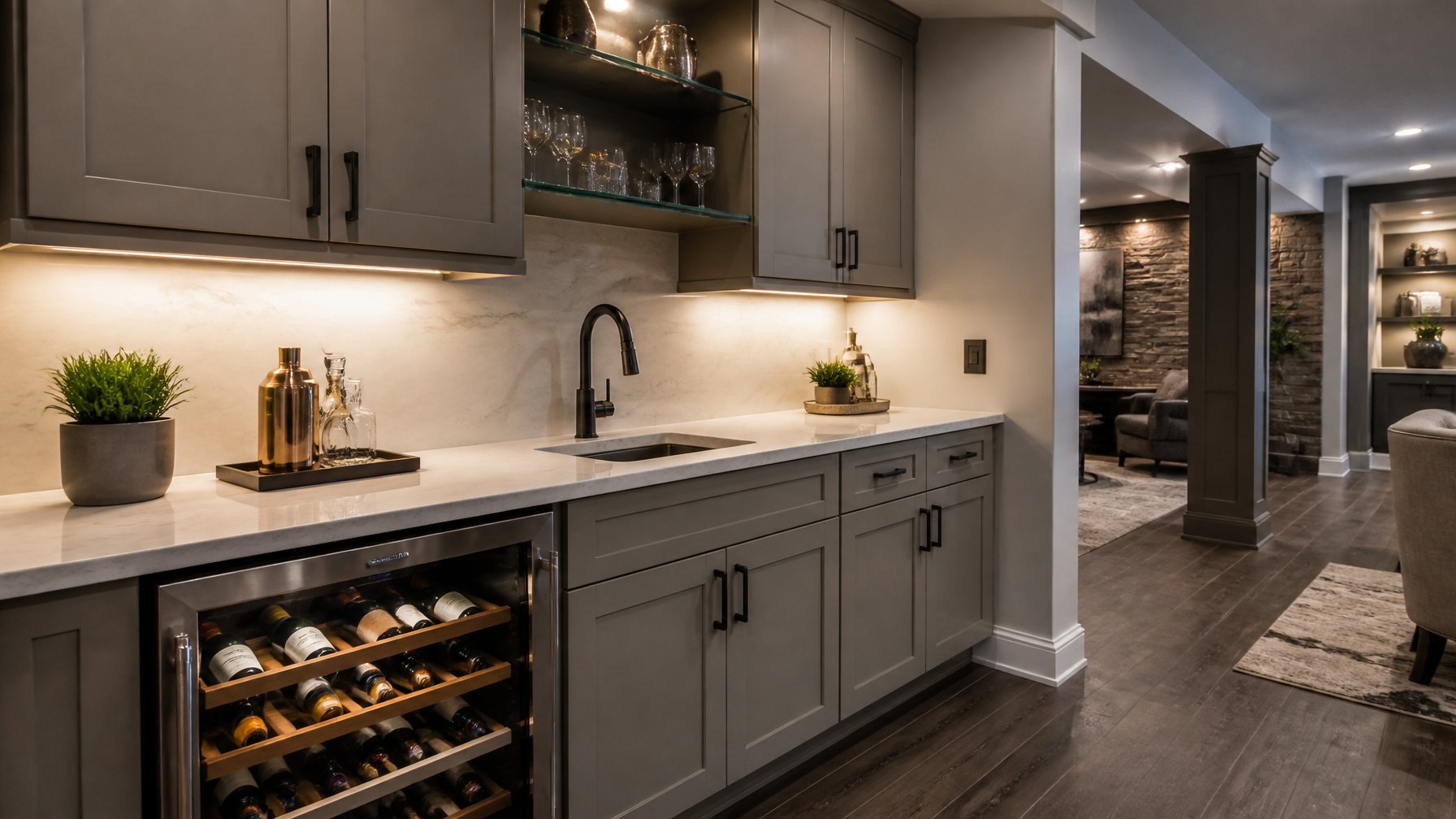
A wet bar adds function and style to a finished basement. Homeowners should compare quartz colors and edge profiles for durability and stain resistance, and ask about slab samples before ordering.
Choose a compact under-counter wine fridge that fits the cabinet opening and keeps bottles at a steady temperature. They should measure door swing, ventilation needs, and power location to avoid costly changes later.
Decide between a single-bowl sink with a pull-down faucet or a smaller prep sink based on space and use. Tradeoffs include storage versus countertop area; ask the contractor how plumbing and drainage will be routed.
For cabinets, pick moisture-resistant materials and finishes that match the quartz. For ideas or contractor referrals, visit the homepage.
5) Home office with daylight basement window well
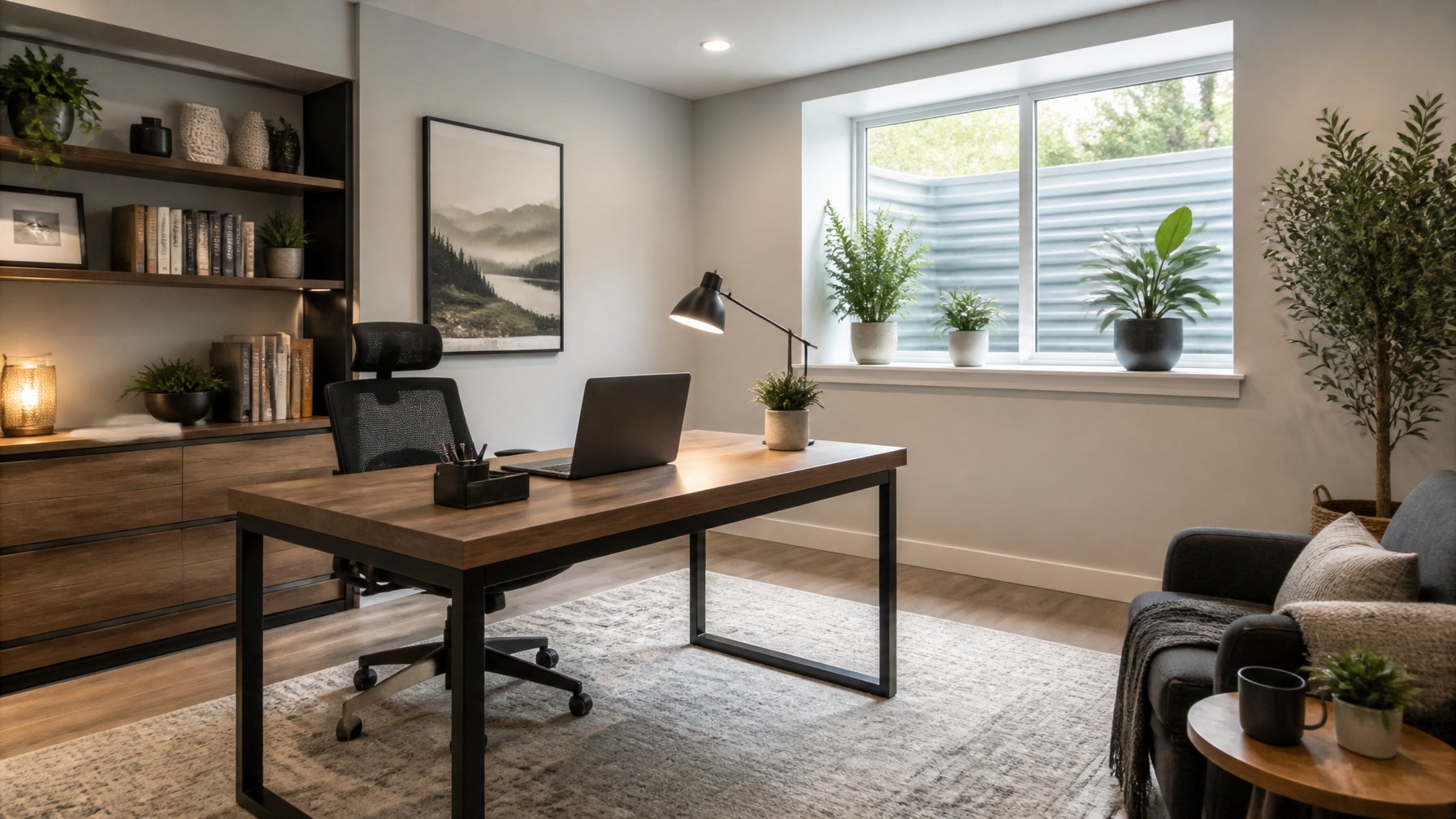
A daylight window well brings natural light into a basement office and reduces the need for artificial lighting. Homeowners should compare window well sizes, glazing options, and egress requirements to match room use and local code.
They should ask about insulated windows, waterproofing around the well, and whether a cover or grate is needed for safety and debris control. Tradeoffs include larger wells for more light versus higher excavation and cost.
Place the desk to face the window for daylight and a view, then add layered lighting for cloudy days. Consider soundproofing and moisture-resistant materials. For more ideas and local services, visit Basement Remodeling.
6) Kids' playroom with washable foam flooring

A playroom with interlocking washable foam tiles keeps kids safe from falls and makes cleanup fast. Compare tile thickness (8–24 mm), density, and anti-slip texture; thicker tiles are softer but cost more and take more space around doors.
Ask installers about water resistance and seams that seal against spills. Choose tiles with easy-lock edges for DIY, or ask a pro about glue-down options for heavy use. Tradeoffs include comfort versus durability and stain resistance versus pattern choices.
Add low shelving, wall-mounted toy bins, and washable paint to limit clutter and simplify cleaning. For design ideas and contractor services, see Basement Finish Contractors. Photos should show realistic home play areas with foam tiles, low furniture, and good lighting.
7) Fitness room with rubber gym tiles and mirrored wall
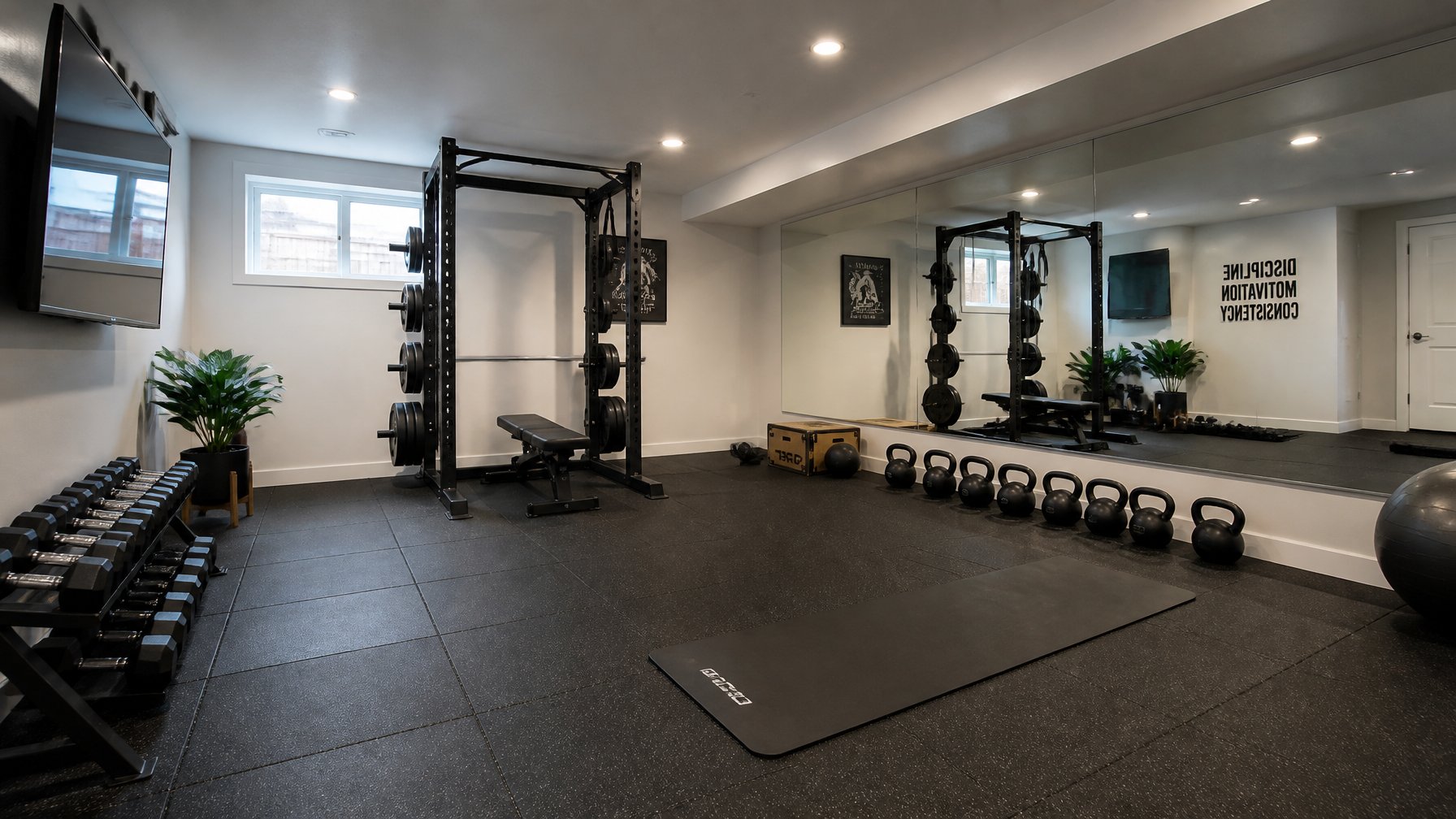
A fitness room needs durable flooring and a clear view for form. Compare rubber tile thickness (8–15 mm) for shock absorption versus cost and weight. Ask about slip resistance, odor, and installation method—interlocking tiles cut labor time but glued tiles last longer.
A mirrored wall helps users check posture and adds light. Measure wall width and ask about safety backing and edge finishing. Trade off full-height glass for framed panels if budget or humidity is a concern.
Plan for ventilation and sound control to protect finishes and neighbors. Consider a dehumidifier and acoustic ceiling tiles. For installation and materials, see basement finishing services.
8) Craft studio with adjustable task lighting and storage cubbies
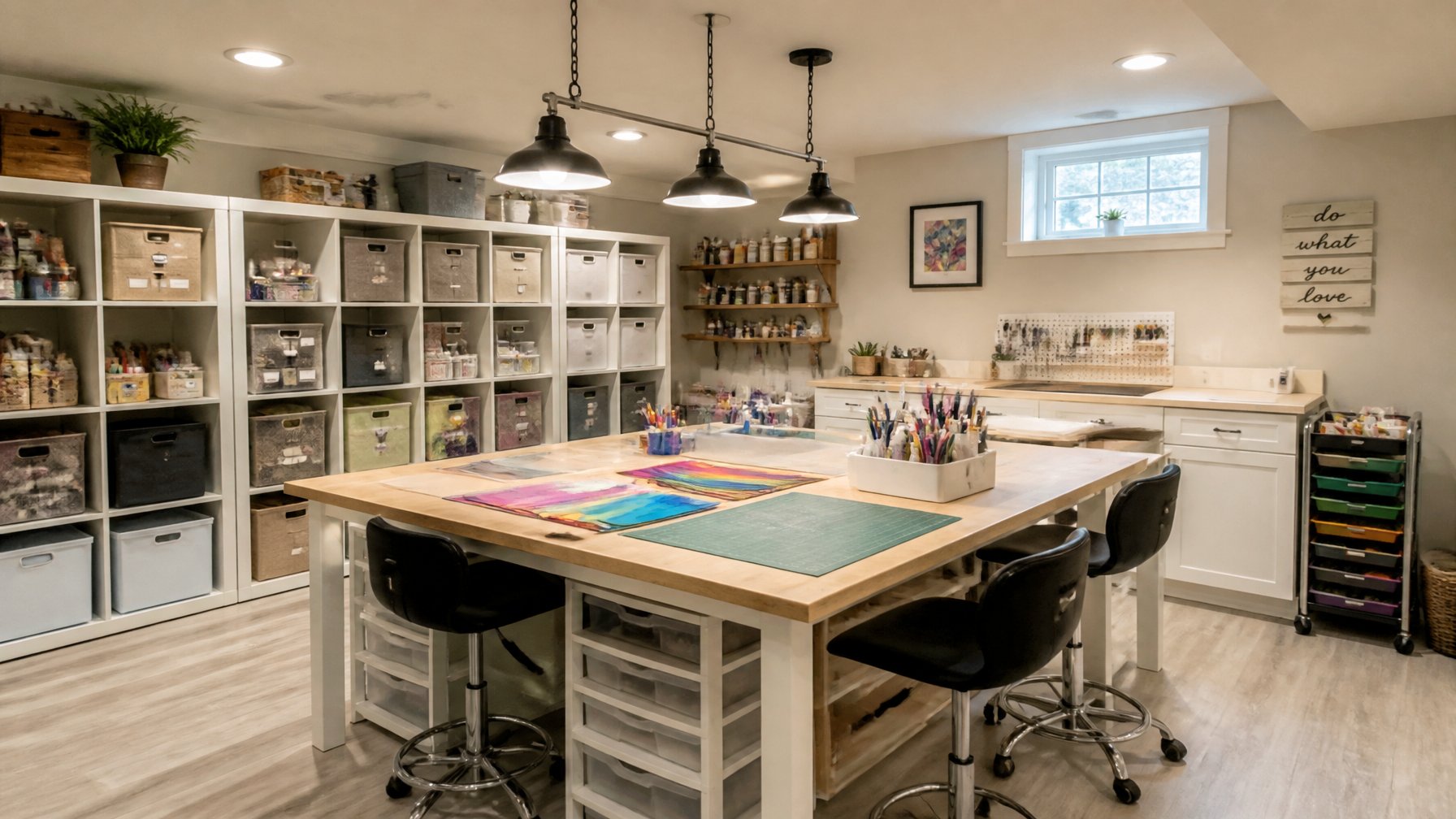
They should set up a dedicated table near good natural light and add adjustable task lights for detailed work. Compare LED color temperature and CRI when buying lamps; ask about glare control and dimming range so colors stay true without eye strain.
Install wall and cubby storage sized for paper, fabric, and tools. Measure supplies first and choose cubby depths and bin sizes; trade off more open shelves for easier access vs. closed drawers for dust control.
Consider a durable, easy-to-clean work surface and pegboard for frequently used tools. Ask if the bench height is adjustable or can be raised for standing work, and compare laminate versus butcher-block tops for cost and repairability.
They can see more ideas and services on the homepage for layout help and lighting options. Keep ventilation and a small sink in mind if paints or adhesives will be used.
9) Mudroom/laundry combo with utility sink and counter
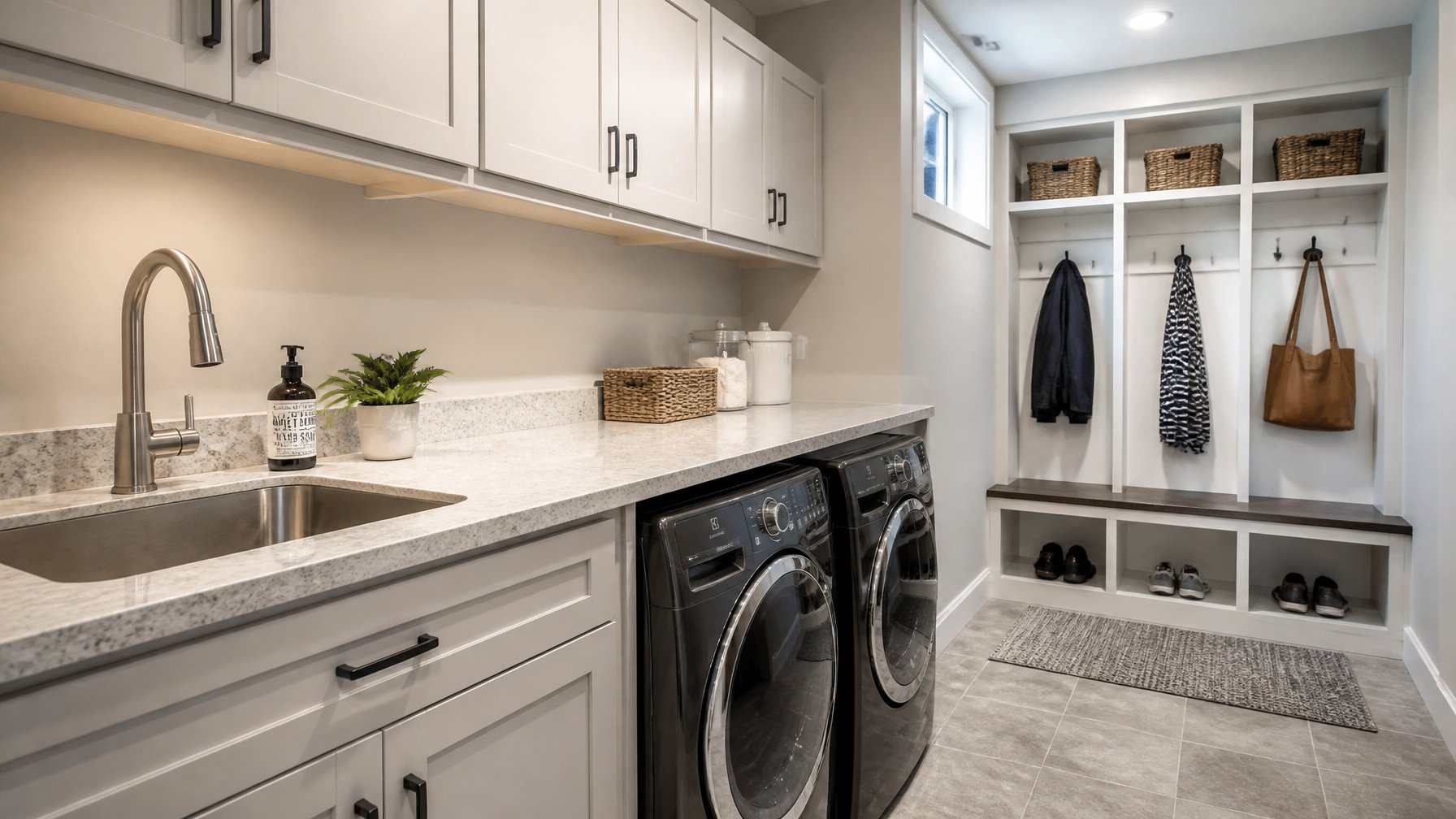
A mudroom/laundry combo saves space and keeps messes contained. Homeowners should compare washer/dryer sizes, counter depth, and sink type. Ask about durable counter materials and slip-resistant flooring; the tradeoff is cost versus long-term maintenance.
They should plan storage for shoes, coats, and laundry supplies. Consider built-in cubbies or open shelves depending on how much concealment they want. Measure door swings and appliance clearances before buying cabinets.
Think about plumbing and venting placement when adding a utility sink. Ask a plumber whether rerouting drains or adding a vent is needed. The tradeoff is higher upfront plumbing work for easier daily use.
For design ideas and contractor resources, see basement finishing services.
10) Upper-level basement apartment with separate entrance
They can convert the basement into a one-bedroom apartment and add a separate entrance for rental income or multigenerational living. Compare costs for adding an egress stair or exterior door versus reworking an existing entrance. Ask about foundation waterproofing, insulation, and soundproofing to keep units comfortable and dry.
They should weigh tenant privacy against shared utility runs and zoning rules. Check local Indianapolis zoning and building permits, and ask a contractor about required fire separation and separate meters. For help with planning and construction, see basement finishing services.