
You can make a finished basement feel brighter, more spacious, and more comfortable with the right lighting choices. Choose lighting that balances overall brightness, energy use, and the mood you want so the space fits family time, movie nights, or a home office.
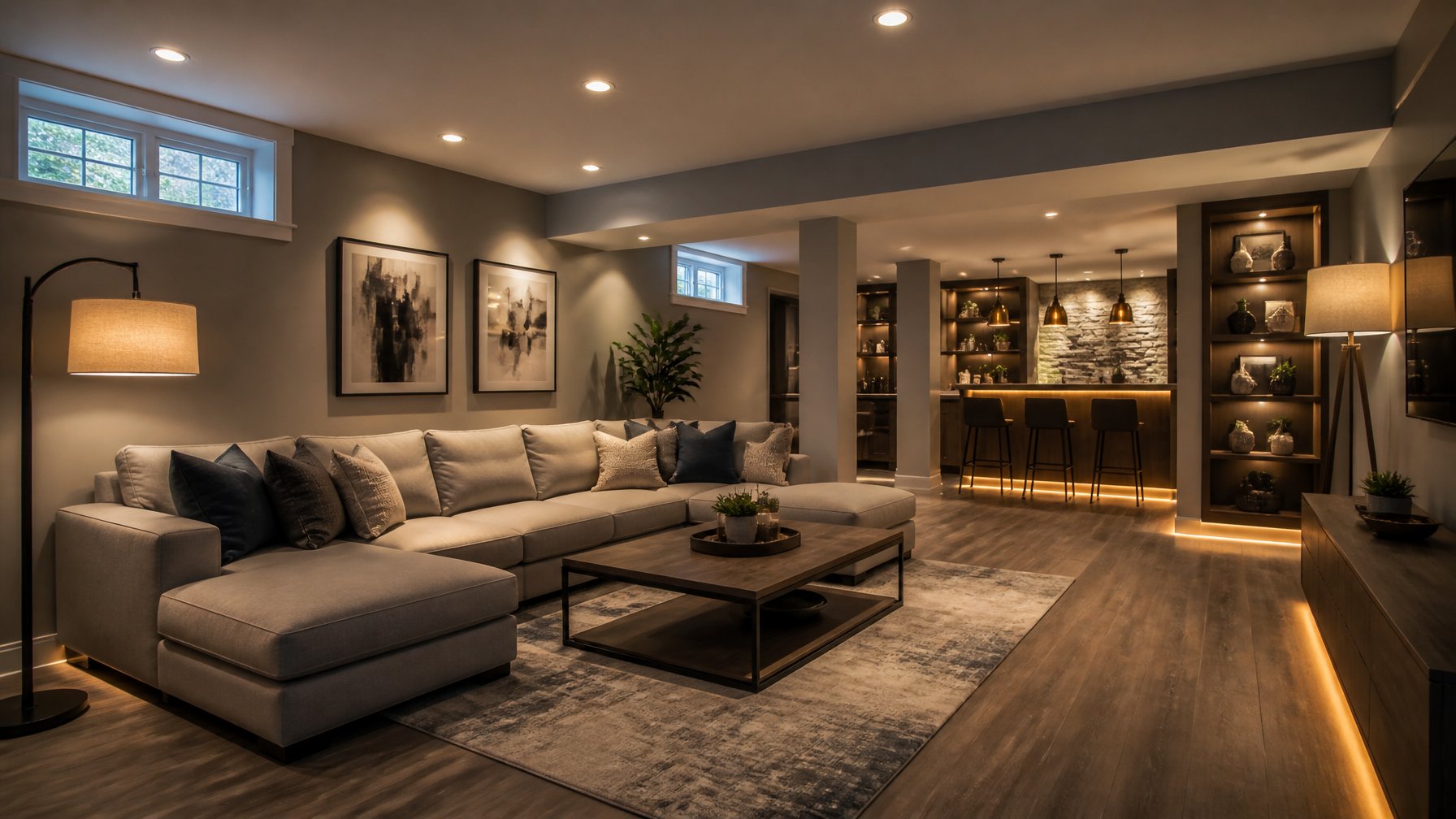
This article shows practical options and tradeoffs to compare as you plan a basement remodel in Indianapolis. It helps homeowners weigh cost, installation complexity, and light quality so they can pick what works best for their space.
1) Recessed LED can lights with dimmers
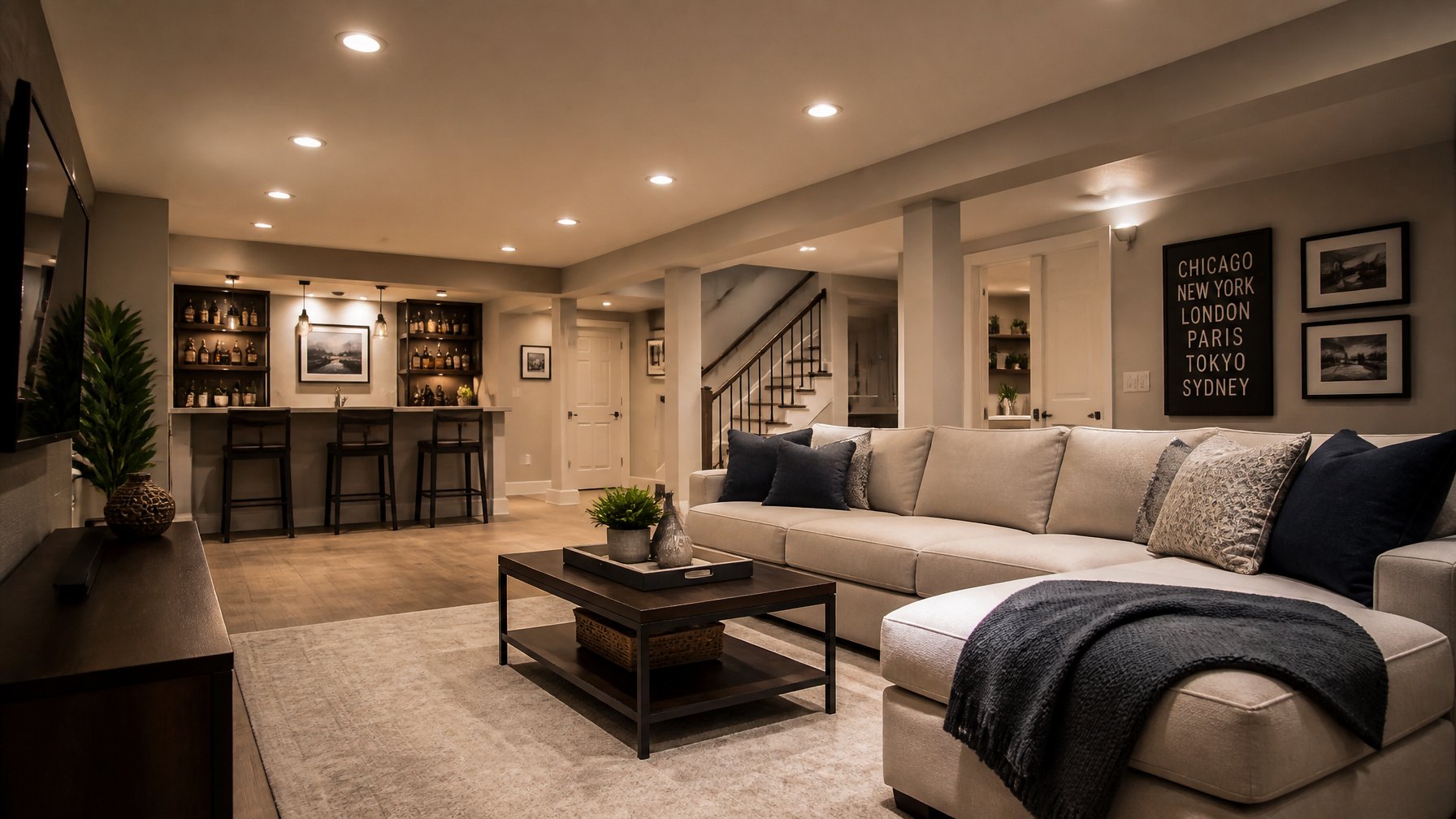
Recessed LED cans give a clean, modern look and free up headroom in low basements. Homeowners should compare lumen output and color temperature (2700K–4000K) to match warmth and brightness needs.
Ask about dimmer compatibility and the dimmer’s minimum load so lights won’t flicker. Tradeoffs include higher upfront cost for LEDs versus long-term energy savings and less maintenance.
They should space cans 4–6 feet apart for even light, or follow a room layout plan for task areas. Consider wet-rated trims for areas prone to moisture and check insulation-contact (IC) ratings if fixtures touch insulation.
For installation help or lighting design advice, see the lighting and electrical services page.
2) Warm white track lighting over seating area
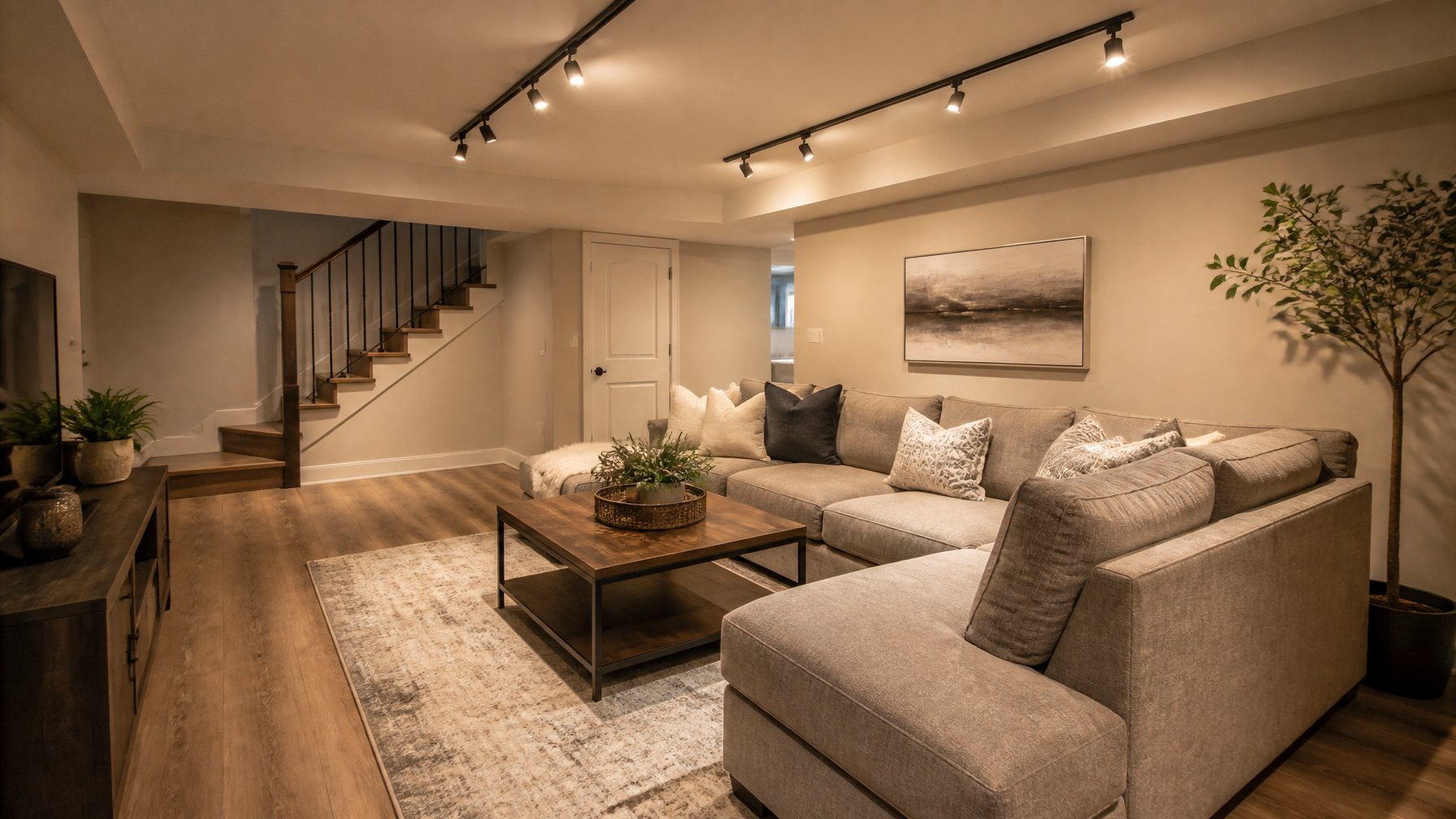
Track lighting in warm white (2700–3000K) makes a basement seating area feel cozy without washing out skin tones. Homeowners should compare lumen output and beam angle so light reaches seats without glare; tighter beams highlight art, wider beams light the whole group.
They should ask if the track is flexible or fixed; flexible systems let them add heads or reposition lights later. A tradeoff exists: more heads give even light but raise cost and power use.
Choose dimmable LED heads and confirm the dimmer matches the LED driver. They should check finish and mounting height so fixtures read as intentional design, not industrial. For layout ideas and installation help, visit the homepage.
3) LED tape lighting along ceiling coves
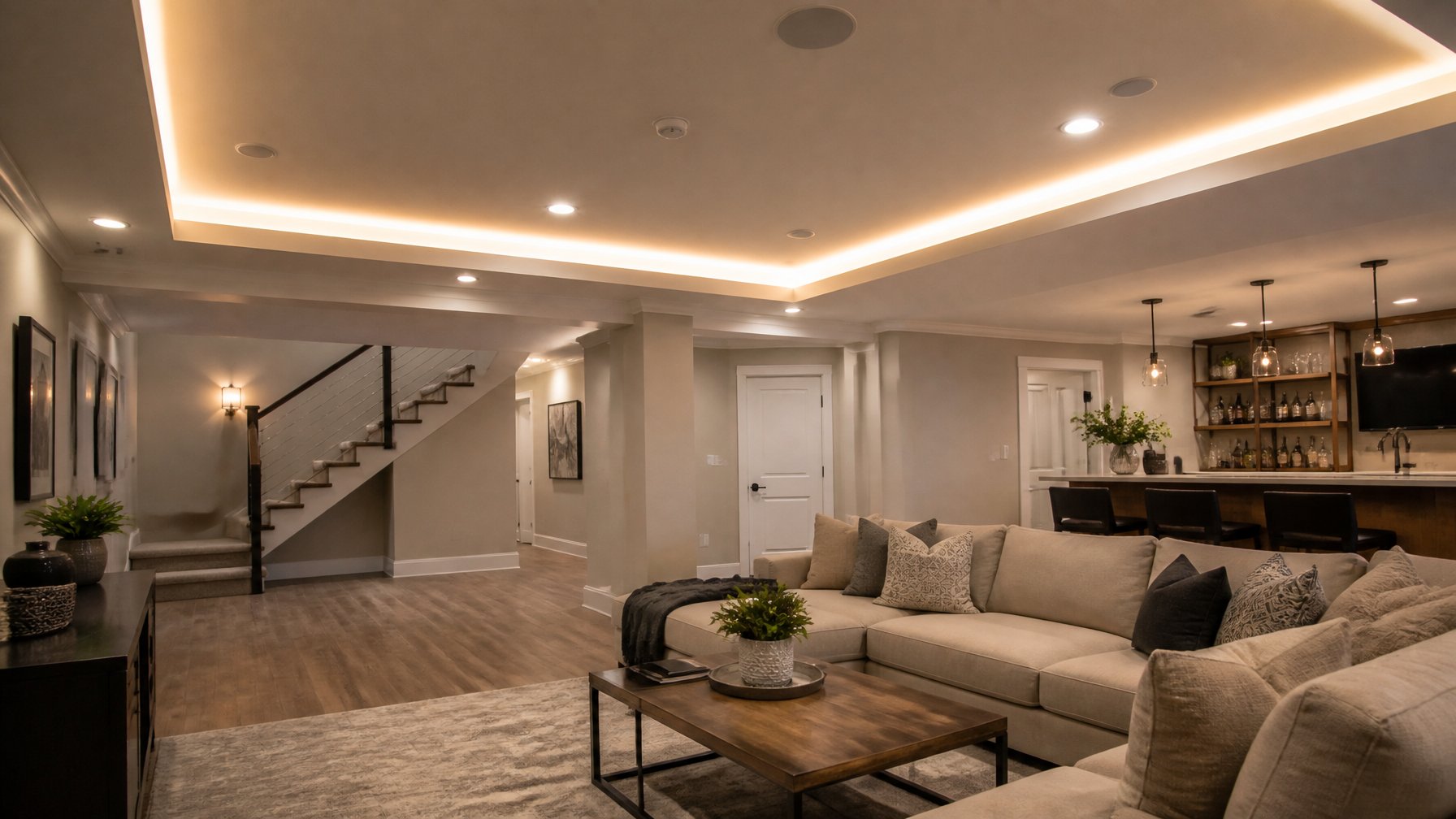
LED tape lights hide in a cove and wash the ceiling with soft, even light. Homeowners should compare color temperature options (2700K–4000K) and choose dimmable tapes for mood control. Ask about CRI if accurate color matters for artwork or finishes.
Measure continuous run length and pick a strip rated for that span to avoid visible brightness drops. They will need proper aluminum channels for heat and cleaner light output. Balance upfront cost versus long life and low energy use.
Confirm driver placement and wiring access before buying; a too-small driver forces a split run. Homeowners may want tunable white tapes but should weigh cost and extra controls. See lighting services for professional planning.
4) Wall sconces with upward uplight
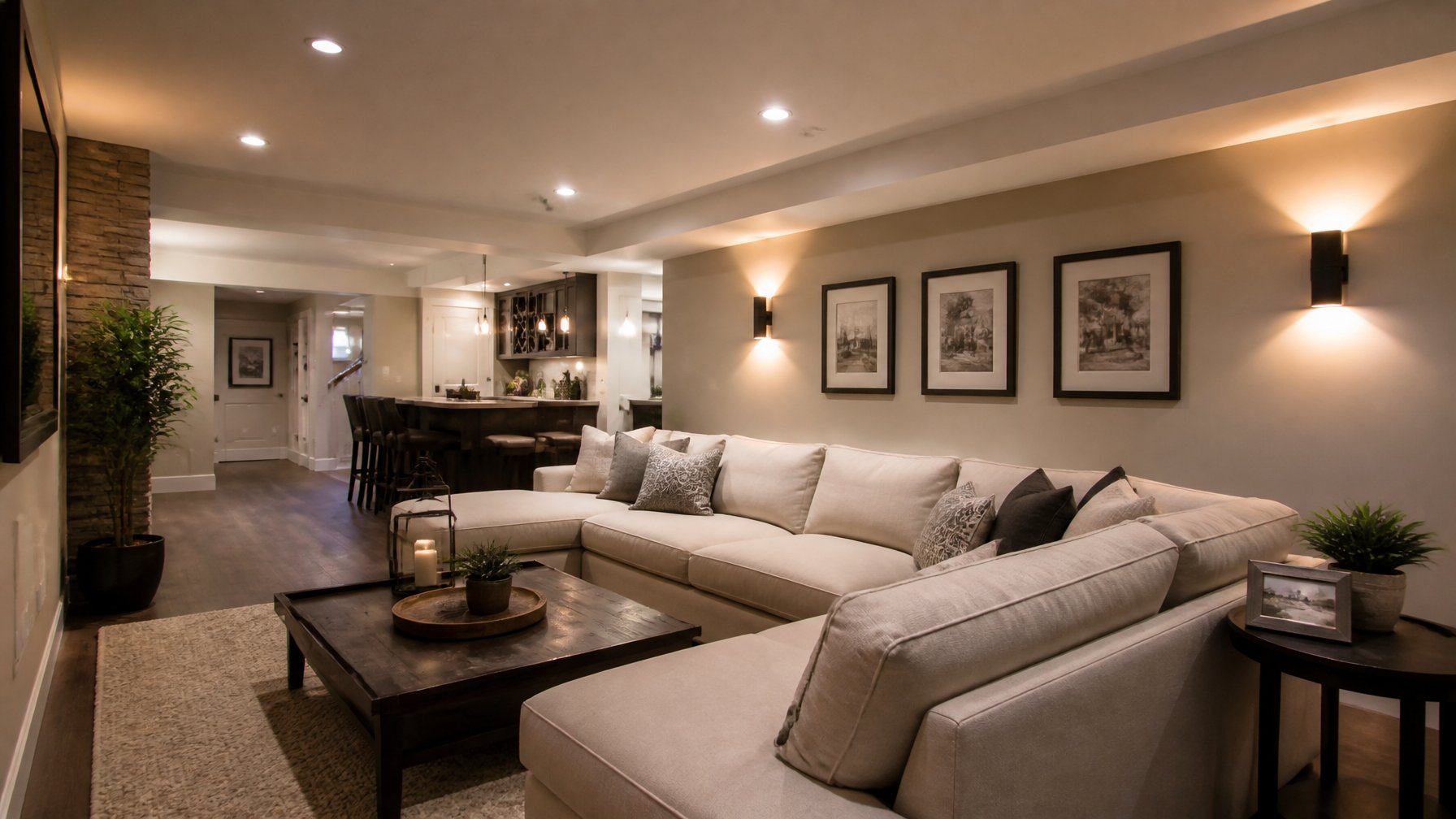
Wall sconces that throw light upward wash ceilings and walls with soft, indirect light. Homeowners should compare lumen output and beam angle to make sure the uplight reaches the ceiling without causing hot spots.
Ask whether the sconce is dimmable and what bulb types it supports, since LED vs. halogen affects warmth and energy use. Consider the tradeoff between style and light spread: slender fixtures look neat but may not throw as wide a wash as larger heads.
Place sconces 6–8 feet apart on long walls and about 5–6 feet high to balance glow and glare. Pair these with recessed or task lights for layered lighting; check wiring needs and ask an electrician if the wall is finished.
See the homepage for more lighting ideas and services to plan placement and wiring.
5) Flush-mount daylight-balanced LEDs
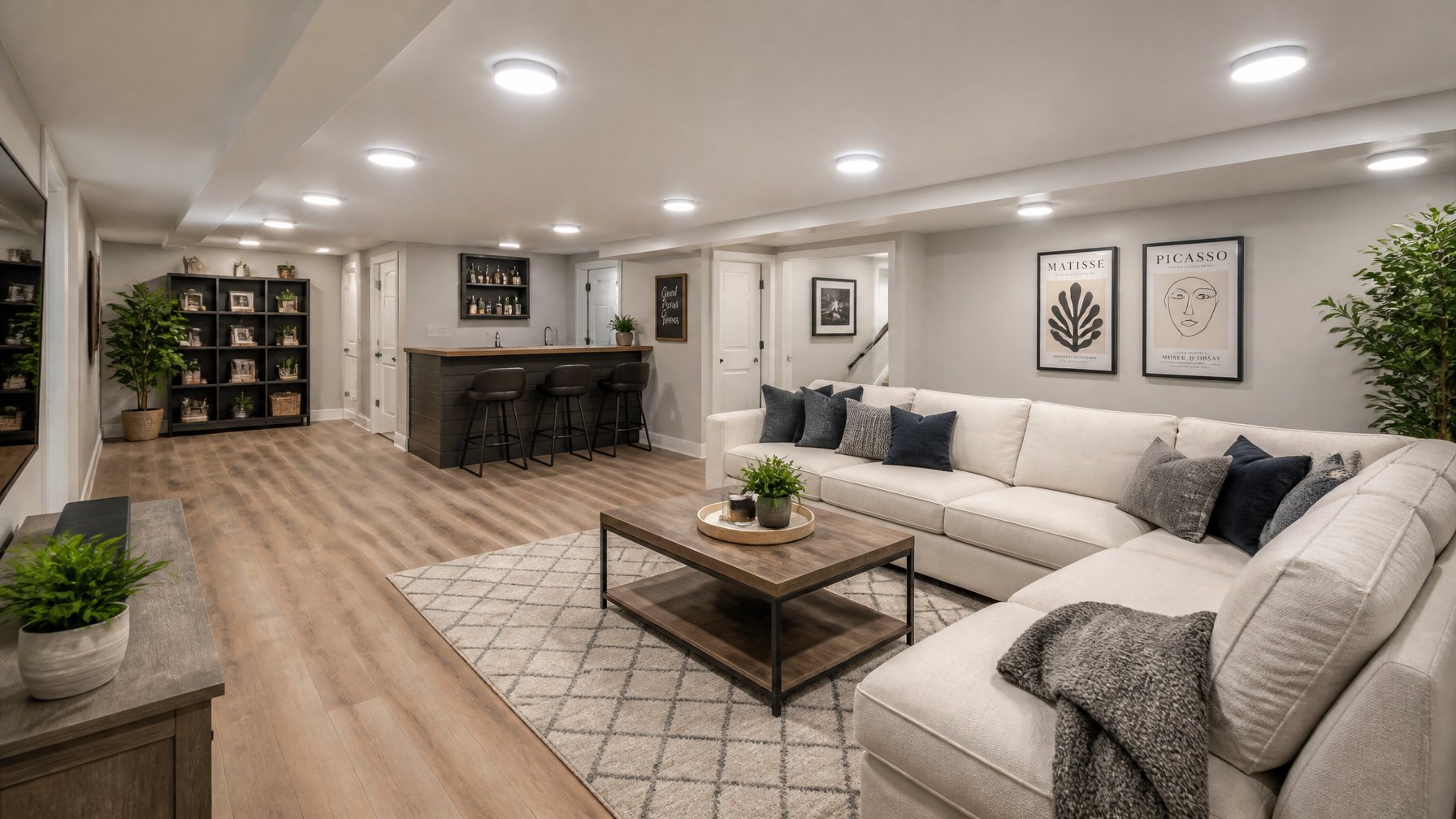
Flush-mount daylight-balanced LED fixtures sit close to the ceiling and spread even light across a finished basement. Homeowners should compare lumen output and color temperature; pick 4000K–5000K for a natural, daylight feel without being too cool.
Ask about dimming compatibility and check the fixture’s CRI (aim for 90+) so colors look true. The tradeoff is lower-profile fixtures give less drama than pendants but reduce shadows and clear the headspace.
They work well spaced evenly for general light, then layer with task lamps where needed. For shop or play areas, choose higher lumens; for lounges, add a dimmer. See the homepage for more lighting ideas.
6) Layered lighting plan: ambient, task, accent
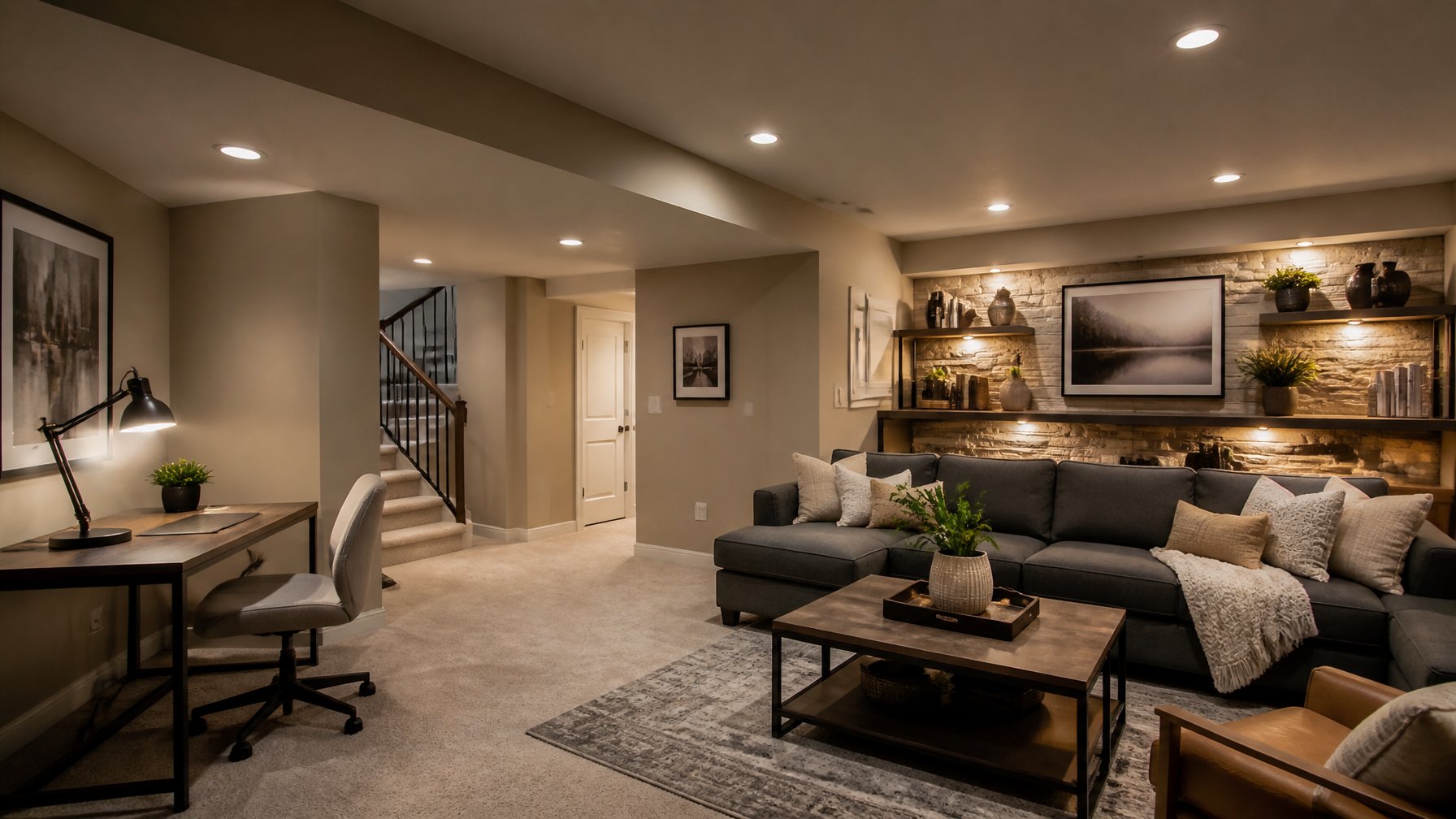
A layered lighting plan mixes three types: ambient for general light, task for activities, and accent for highlights. Homeowners should compare brightness levels (lumens) and color temperature (Kelvin) when choosing fixtures to balance warmth and visibility.
They should ask how each zone will be used and where shadows fall. A tradeoff often comes between brighter task lighting and a cozy ambient level; dimmers help control that balance.
Choose fixtures that match ceiling height and layout, like recessed ambient lights, under-cabinet task lights, and wall washers for accents. Consider energy use and bulb type; LED costs more up front but saves power over time.
For ideas and fixture options, see Basement lighting solutions. Make sure wiring and switch placement allow separate control of each layer so the space can shift from work to relaxation without rewiring.
7) Skylight tube (solar) for daytime brightness
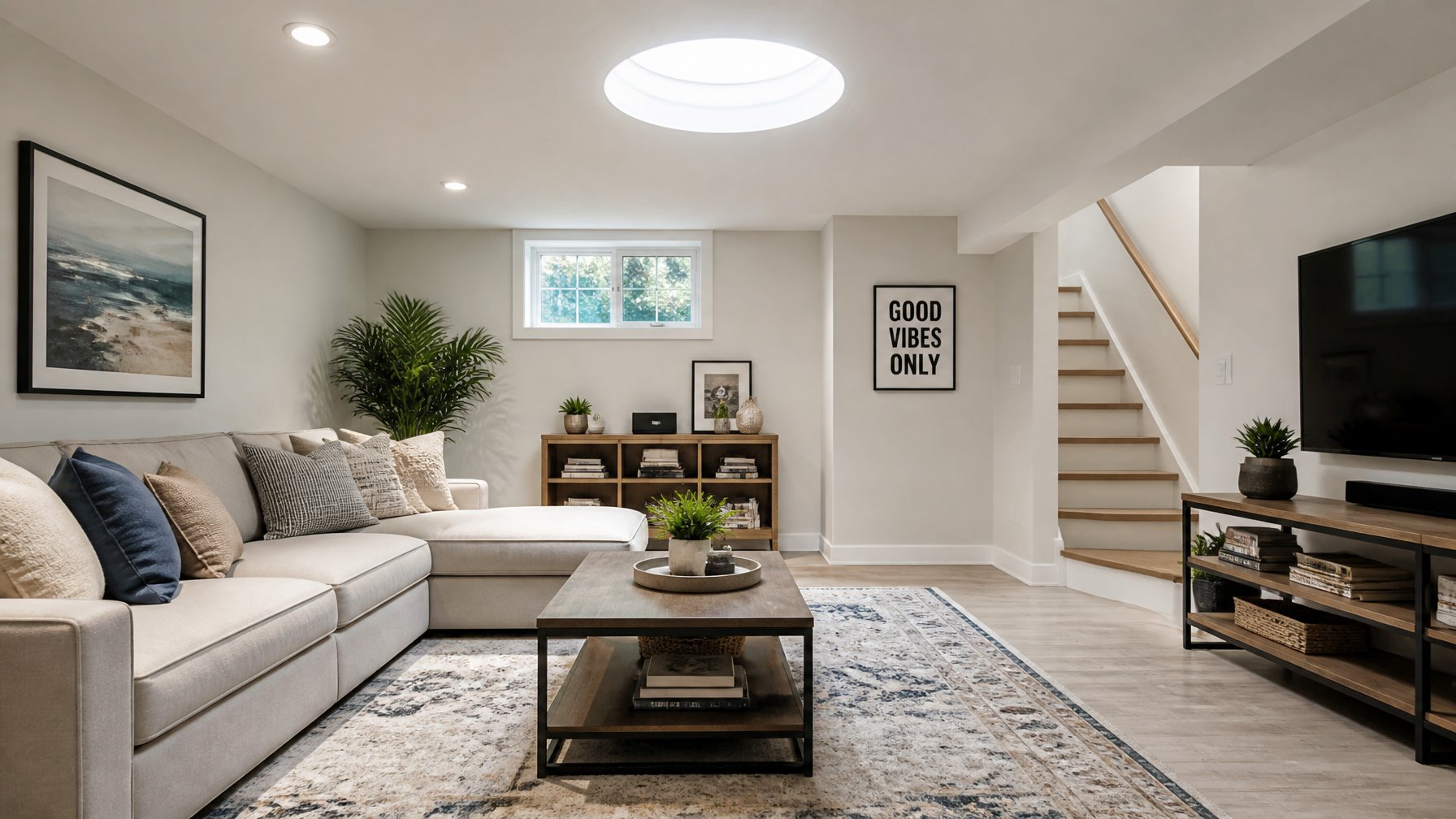
A solar skylight tube pulls sunlight through a small roof dome and a reflective tube into the basement. Homeowners should compare tube diameter, roof pitch limits, and the quality of the diffuser to balance brightness and cost.
Ask about flashing type and whether the installer will seal for both rain and insulation. The tradeoff often is brightness versus roof penetrations; larger tubes give more light but need better flashing and sometimes structural work.
Check how the tube routes through attic space and whether any insulation or ventilation will be disturbed. For a quick look at related services, see the homepage for daylighting and skylight options.
They should expect realistic home-improvement photos for final placement, and confirm warranty and any recommended attic work before hiring.
8) Under-cabinet LED strips for bar or kitchenette
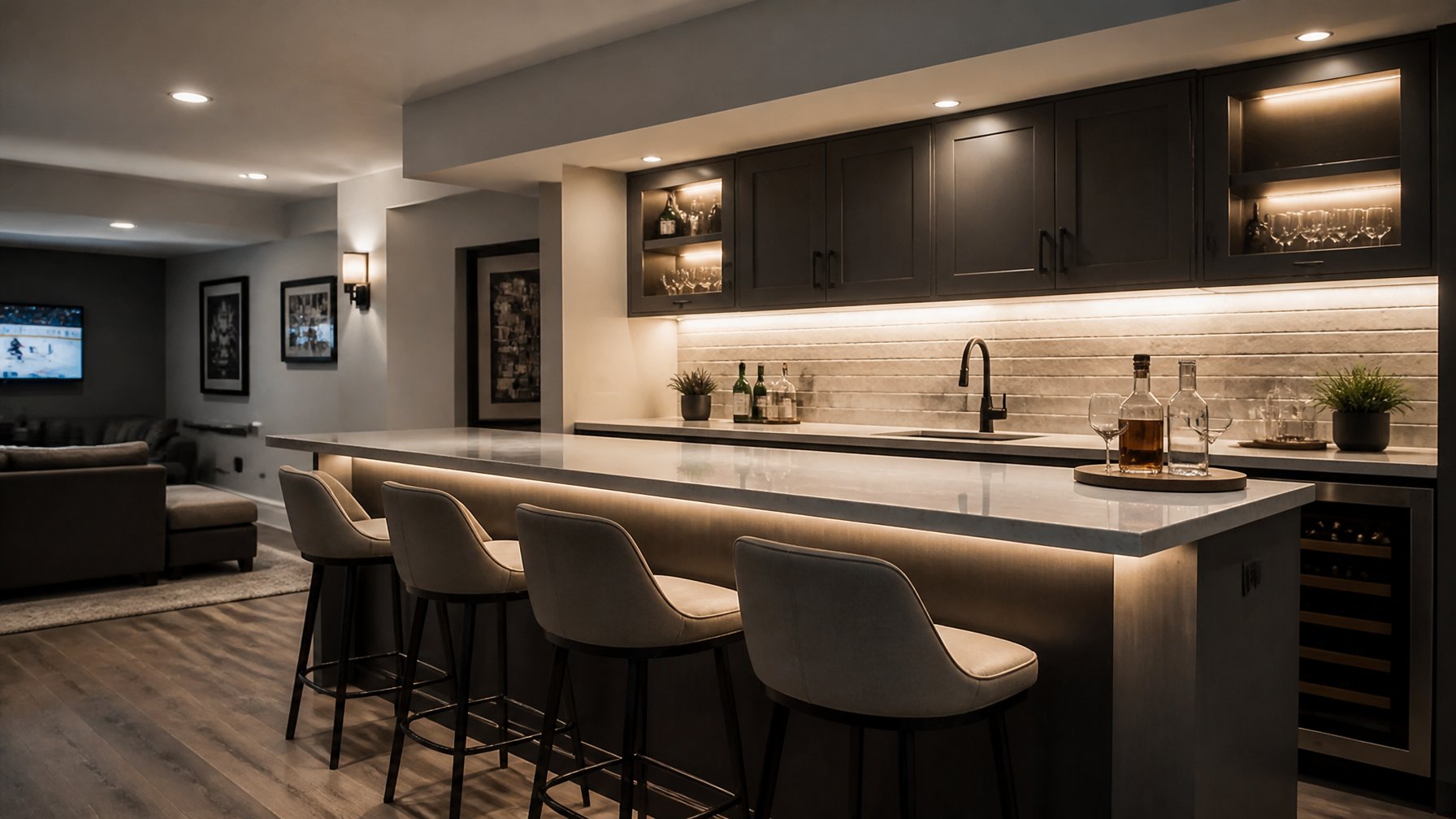
Under-cabinet LED strips give even task light for prep and drink service. Homeowners should compare color temperature (2700K warm vs 4000K neutral) and choose dimmable drivers to control mood and glare.
Look for high CRI (90+) so food and surfaces look natural. They should ask about waterproofing if the bar has a sink, and check strip length, cut points, and connector types to avoid extra joints.
Decide between plug-in kits and hardwired drivers. Plug-in is cheaper and easier to install; hardwiring looks cleaner but may need an electrician. Consider adhesive quality and mounting channels for long-term hold.
For trims and switches, they should test tape brightness and choose warm tones for a cozy feel. See homepage for more lighting ideas.
9) Smart bulbs (tunable white) for mood control
They let homeowners change color temperature from warm to cool. Compare bulbs by lumens, tunable range (2700K–6500K is common), and app or hub compatibility.
Ask whether bulbs need a hub, if they support schedules and scenes, and whether voice assistants work. Tradeoffs include higher cost vs. ease of dialing in mood and energy savings.
Place tunable bulbs in recessed cans or table lamps to layer light. Use cool whites for work or bright projects, and warm whites for relaxing or watching movies.
Look for bulbs with good color rendering index (CRI > 80) so colors look natural. Check bulb size and dimming method to ensure they fit existing fixtures.
See home lighting services for installation help and smart integration ideas.